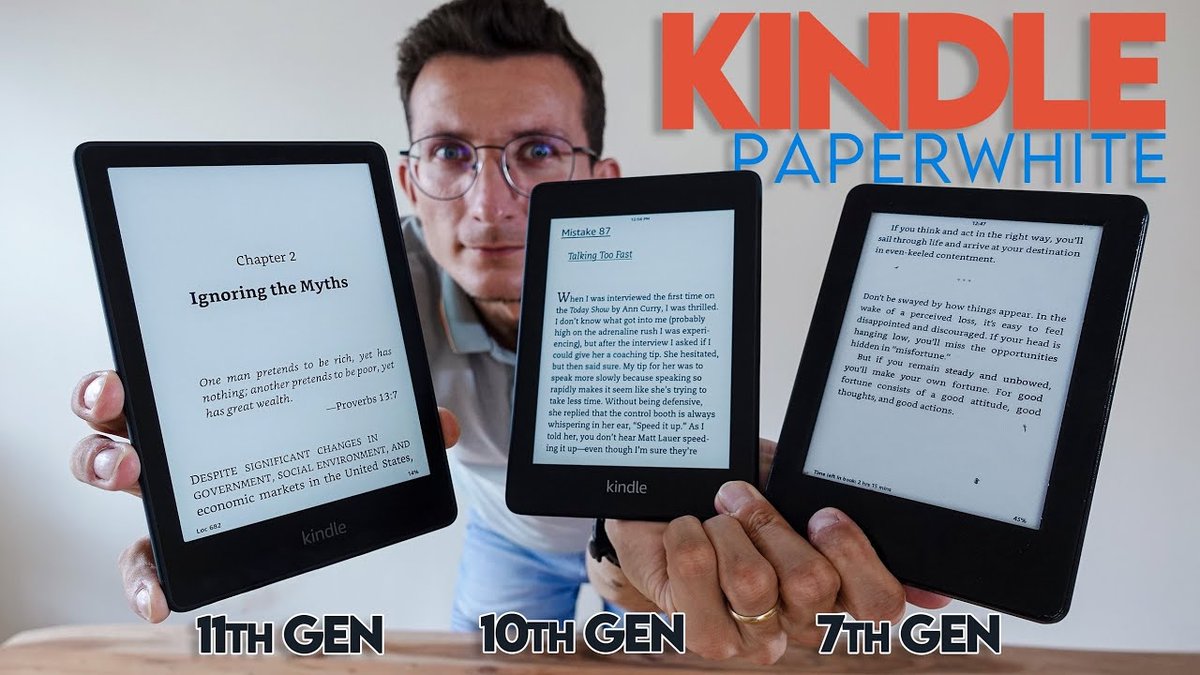
For over a decade, the Kindle has reshaped how millions interact with books, making reading more accessible and portable than ever before. From its humble beginnings as a bulky e-reader to its current lineup of sleek, feature-rich devices, the Kindle Device Evolution & Models represent a fascinating journey of innovation in personal technology. Today, Kindle e-readers command an estimated 80% of the e-reader market, a testament to Amazon's enduring vision in a sector valued at $6.2 billion in 2023 and projected to double to $13.5 billion within the next decade.
This guide delves into every significant leap, every model, and every key feature that has defined the Kindle experience. You'll gain a comprehensive understanding of how these devices have evolved, what sets each generation apart, and what the future holds for your digital library.
At a Glance: Key Takeaways from Kindle's Journey
- Twelve Generations Strong: Since its 2007 debut, Kindle has evolved through twelve distinct generations, with new models continuously refining the e-reading experience.
- Market Dominance: Kindle holds a commanding 80% share of the e-reader market, demonstrating its widespread appeal and trust.
- From Basic to Advanced: The product line has expanded from simple e-readers to include premium, waterproof models and even note-taking tablets.
- Core Innovations: Key advancements include E Ink display improvements, built-in lighting, touchscreens, Wi-Fi, waterproofing, audio support, and stylus functionality.
- The Future is Bright (and Color): Recent and upcoming models (2024-2025) are pushing boundaries with brighter displays, adjustable warm light, USB-C, and new color E Ink technology.
- Beyond Reading: The Kindle Scribe introduced a significant shift towards productivity, offering writing and annotation capabilities.
The Genesis of Reading: Generations 1-3 (2007-2010)
The story of Kindle began with a bold vision: to put every book ever written at your fingertips. The early years laid the essential groundwork, establishing core features that would define the e-reader for years to come.
The Original Vision: Kindle (First Generation, 2007)
On November 19, 2007, Amazon launched the very first Kindle for $399. It sold out in a blistering 5.5 hours, signaling an immediate, massive demand for portable digital reading. This pioneering device featured a 6-inch, four-level grayscale E Ink display, 250 MB of internal storage (enough for about 200 non-illustrated books), a speaker, headphone jack, and even an SD card slot for expansion.
Connectivity was a game-changer: the Kindle accessed content via Sprint's US-wide EVDO 3G data network, dubbed "Whispernet." This meant you could buy and download books anywhere, anytime, without needing a computer. It was a revelation, though initially confined to the U.S. market.
Expansion and Experimentation: Kindle 2 & DX (Second Generation, 2009-2010)
Building on the original's success, the Kindle 2 arrived in February 2009. It was sleeker, offered text-to-speech, and boosted internal memory to 2 GB (1.4 GB user-accessible), accommodating around 1,500 books. Crucially, the Kindle 2 international, released in October 2009, brought the device to over 100 countries, leveraging standard GSM and 3G GSM networks for truly global, free-roaming connectivity.
May 2009 saw the introduction of the Kindle DX, a significantly larger e-reader. With a 9.7-inch screen (the largest until the Scribe many years later), 150 ppi, and PDF support, it aimed at students and professionals. An accelerometer allowed for automatic screen rotation. The Kindle DX international followed in early 2010.
By July 2010, the Kindle DX Graphite (DXG) emerged, featuring an E Ink Pearl display with 50% better contrast and a graphite case. While it lacked Wi-Fi, it combined newer hardware with earlier software, a unique blend that offered free 3G data for the Kindle Store and Wikipedia.
The Classic: Kindle Keyboard (Third Generation, 2010)
Known affectionately as the "Kindle Keyboard" (due to its prominent physical keyboard), this generation, announced in July 2010, quickly became Amazon's fastest-selling Kindle and, by year-end, its best-selling product overall. It refined the 6-inch display, now using the higher-contrast E Ink Pearl at 167 PPI, and was 21% smaller and 15% lighter than the Kindle 2.
This was the first time Amazon offered both Wi-Fi ($139) and 3G+Wi-Fi ($189) models, making it more accessible. With 4 GB of internal memory and a remarkable two-month battery life (with wireless off), it solidified the Kindle's position. May 2011 also saw the introduction of the ad-supported "Kindle with Special Offers," lowering the price point and opening the door to a wider audience. If you're looking to Explore all Kindle generations, the Keyboard remains a beloved classic.
Embracing Modernity: Touchscreens & Backlights (Generations 4-6, 2011-2013)
The mid-years of Kindle's evolution brought crucial shifts: moving away from physical keyboards and introducing the one feature that would truly revolutionize night-time reading.
The Leaner, Meaner Lineup: Kindle 4 & Touch (Fourth Generation, 2011)
September 2011 marked a turning point with the announcement of the Kindle 4 and Kindle Touch. The Kindle 4 ($79 ad-supported) was significantly less expensive, retaining the 6-inch E Ink display but shedding the physical keyboard for a cursor pad and on-screen keyboard. It was a clear move towards streamlining the basic model.
The Kindle Touch was the true harbinger of change, introducing a touchscreen to the Kindle lineup. Available in Wi-Fi and Wi-Fi/3G versions, it was released in November 2011. While its 3G capabilities were somewhat limited (Kindle Store, Wikipedia access, but experimental web browsing only via Wi-Fi), it established the modern interaction paradigm. It also debuted "X-Ray," a feature allowing readers to quickly look up characters, locations, and themes within a book.
The Game Changer: Kindle Paperwhite (Fifth & Sixth Generations, 2012-2013)
The most impactful innovation of this era was undoubtedly the Kindle Paperwhite (1st iteration), announced in September 2012. For the first time, a Kindle featured a built-in light, achieved with four LEDs illuminating a 6-inch, 212 PPI E Ink Pearl display. This meant comfortable reading in any lighting condition, day or night, without an external light source.
The original Paperwhite lacked physical page-turn buttons, a design choice that would persist in many future models. It also introduced "Time to Read," tracking your reading speed. While early models faced some criticism for inconsistent lighting, the Paperwhite quickly became the gold standard for e-readers.
The Kindle Paperwhite (2nd iteration), or "Paperwhite 2," followed in September 2013. It refined its predecessor with a higher-contrast E Ink Carta display, improved LED illumination, and a faster 1 GHz processor, offering better touch response and snappier page turns. Both Paperwhite generations offered impressive battery life, up to eight weeks under typical usage. Software enhancements like Goodreads integration, Page Flip, and Vocabulary Builder further enriched the reading experience.
The Pursuit of Perfection: Resolution, Design & Durability (Generations 7-8, 2014-2016)
As the Kindle matured, Amazon focused on delivering higher resolution, more premium designs, and ultimately, greater durability.
High-End Displays & Design: Kindle Voyage & Paperwhite 3 (Seventh Generation, 2014-2015)
The Kindle Voyage, released in November 2014, represented Amazon's push into the premium e-reader market. It boasted a stunning 6-inch, 300 ppi E Ink Carta HD display – the highest resolution and contrast available at the time. It also introduced an adaptive front light with six LEDs and a flush glass screen, giving it a sleek, modern look. The Voyage was the thinnest Kindle to date and featured "PagePress" sensors, allowing users to turn pages by gently pressing the bezels.
The Kindle Paperwhite (3rd iteration), released in June 2015, brought the high-resolution 300 ppi E Ink Carta HD display to the popular Paperwhite line, effectively doubling the pixel count of the original. This made text incredibly sharp and clear, rivaling print. It also introduced the Bookerly font and improved text formatting for a more comfortable reading experience.
The basic Kindle 7, released in October 2014, also saw a significant upgrade, becoming the first basic Kindle to feature a touchscreen and a 1 GHz CPU, making it a much more capable entry-level device.
Premium Experience & Accessibility: Kindle Oasis 1 & Basic Kindle 8 (Eighth Generation, 2016)
April 2016 saw the debut of the Kindle Oasis (1st iteration), a radical redesign aimed at the luxury market. It featured an asymmetrical design with physical page-turn buttons and an accelerometer, allowing users to comfortably hold and operate the device with one hand, whether left or right. It was incredibly thin and light on one side, with a thicker portion housing the battery and components.
The Oasis came with a removable leather battery cover that not only protected the device but also significantly extended its battery life. While not waterproof, it offered a premium build with ten LEDs for its front light.
The Kindle 8, released in June 2016, refined the basic Kindle, making it smaller, thinner, and lighter than its predecessor. Notably, it was the first Kindle to include Bluetooth, supporting the VoiceView screen reader for visually impaired users – a significant step forward in accessibility.
Waterproofing, Audio & Color Temp (Generations 9-10, 2017-2019)
The later 2010s focused on adding ruggedness, expanding functionality beyond just text, and introducing features that enhanced reading comfort, like adjustable light warmth.
Ruggedness and Audio: Kindle Oasis 2 (Ninth Generation, 2017)
The Kindle Oasis (2nd iteration), released in October 2017, took the premium Oasis concept even further. It featured a larger 7-inch E Ink display, still at 300 ppi, and maintained the distinct asymmetric aluminum design. The biggest headline feature, however, was its IPX8 rating, making it the first Kindle to be water-resistant (up to two meters for 60 minutes). This made it ideal for reading by the pool or in the bath.
The Oasis 2 also introduced the ability to display black background with white text, a popular feature for some readers. With 12 LEDs and ambient light sensors for auto-brightness, it offered a superior reading experience. Crucially, it was the first Kindle to support Audible audiobooks via Bluetooth headphones or speakers, turning the e-reader into an audiobook player.
Refinements and Warm Light: Paperwhite 4, Basic Kindle 10, Oasis 3 (Tenth Generation, 2018-2019)
The Kindle Paperwhite (4th iteration), released in November 2018, brought many of the Oasis 2's premium features to a more accessible price point. It featured a 6-inch, 300 ppi flush screen, was IPX8 waterproof, and also supported Audible audiobooks via Bluetooth. It dropped physical buttons in favor of a sleeker, all-touch design.
The basic Kindle (10th generation), announced in March 2019, finally introduced a front light (4 LEDs) to the entry-level model, a long-requested feature. It maintained a 6-inch, 167 ppi display but with improved contrast. This model also saw the debut of the "Kindle Kids" edition, bundling the device with a child-friendly case, a year of Amazon Kids+, and a robust warranty.
The Kindle Oasis (3rd iteration), released in July 2019, built upon the Oasis 2 with one significant enhancement: a 25-LED front light with adjustable color temperature. This allowed users to shift the screen's hue from cool white to warm amber, reducing blue light exposure for more comfortable night-time reading. This model was removed from the US market in early 2024, signaling a shift in the premium lineup.
The USB-C Era & Writing Tablets: Scribe Arrives (Eleventh Generation, 2021-2022)
The most recent generation has focused on modernizing connectivity, enhancing displays, and taking a monumental leap into the world of digital note-taking.
Modern Connectivity and Bigger Screens: Paperwhite 5 & Signature Edition (2021)
September 2021 brought the Kindle Paperwhite (5th iteration), a significant upgrade to the popular line. It featured a larger 6.8-inch display with thinner bezels, 17 LEDs for its front light (including adjustable warm color temperature), and a faster processor. Crucially, it was the first Kindle to adopt a USB-C port, finally moving away from micro-USB. Battery life was extended to an impressive ten weeks.
A higher-cost variant, the Kindle Paperwhite Signature Edition, added Qi wireless charging, 32 GB of storage, and an ambient light sensor for auto-brightness. A 16 GB Signature Edition was added in September 2022, offering more choice.
The basic Kindle (11th generation), announced in September 2022, also received a major upgrade, now featuring a sharper 300 ppi display, 16 GB of storage, and a USB-C port, making it a very capable entry-level option.
The Bold Leap: Kindle Scribe (2022)
The biggest innovation of the 11th generation was undoubtedly the Kindle Scribe, released in November 2022. This marked Amazon's entry into the e-note market. It featured a large 10.2-inch, 300 ppi display and, for the first time, stylus functionality for writing. Available with Basic or Premium Wacom EMR compatible stylus pens, it offered interchangeable nibs, magnetic attachment, and pressure/tilt sensitivity (the Premium pen added an eraser and shortcut button).
Initial software was criticized for limited note-taking features, but Amazon has since released significant firmware updates, adding handwriting-to-text export, lasso select, enhanced PDF handling, and the ability to "Write-on Books" content directly within reflowable e-books. The Scribe also broke new ground by being the first Kindle since the Keyboard to not offer an ad-supported model.
Looking Ahead: The Cutting Edge of 2024 & 2025 (Twelfth Generation & Beyond)
Amazon's commitment to innovation continues unabated, with several exciting developments recently announced and on the horizon.
The 2024 Refresh: Brighter Displays, Color Comes to Paperwhite
October 2024 saw a significant revamp across the Kindle family:
- Kindle 11 (2024 release): The basic model received an updated display with brighter LEDs and new color options like black and matcha.
- Kindle Paperwhite (6th iteration, 2024): This new Paperwhite increased its screen size to 7 inches and incorporated newer screen technology for improved speed and contrast. It also comes with 16 GB of base storage and new color choices: black, raspberry, and jade.
- Paperwhite Signature Edition (2024): This model mirrored the enhancements of the new Paperwhite while retaining its premium features like wireless charging and an ambient light sensor. It also introduced metallic body colors.
- Kindle Colorsoft Signature Edition (2024): Released October 30, 2024, this was a groundbreaking moment for Kindle. Based on the PW6SE hardware, it featured a new Kaleido-based 7-inch display with customized E Ink Kaleido display layers. This delivered increased optical performance, offering significantly better color and brightness than existing color e-readers. Debuting at $279.99, it was initially available only in Metallic Black.
- Kindle Scribe (2024 release): Released December 4, 2024, this version of the Scribe received a redesigned front face with white bezels and a new color-matching Premium stylus pen with a soft rubber eraser. The base 16 GB model now includes the Premium stylus. This model also saw significant software updates (available to 2022 Scribes via firmware), including "Active Canvas" for writing directly on reflowable e-books, an "Extended Margin" for handwriting, and advanced Notebook features like handwriting-to-script conversion and LLM genAI-powered summaries.
The 2025 Vision: Scribe's Evolution and Thinner Color Displays
Looking even further ahead, Amazon has outlined ambitious plans for 2025:
- Kindle Colorsoft (2025 release): Announced July 24, 2025, this will be a Colorsoft model without the Signature Edition features, with specs equivalent to the regular Paperwhite, in a black body. A Kids Edition is also planned.
- New Scribe Lineup (Announced September 30, 2025): A significant refresh of the Scribe is on its way, featuring a revised case design and a Kindle Scribe Colorsoft model. The display stack has been redesigned to be thinner, allowing for internal components to be placed under the display and removing the asymmetric bezel. The display size will increase to a massive 11 inches, maintaining a sharp 300 dpi E Ink Carta HD. All new Scribe models will include a new Premium Pen stylus.
- Kindle Scribe without FrontLight: The new lowest-cost option, with 16 GB storage and no built-in light, featuring a light gray bezel.
- Kindle Scribe: Includes a FrontLight, with 32 GB or 64 GB storage and a white bezel.
- Kindle Scribe Colorsoft: The most advanced model, featuring the customized E Ink Kaleido color display panel, 32 GB or 64 GB storage. It will come in Graphite or a unique Fig body color (64GB only).
- The 2025 Scribe models will also feature significant software changes, including a new Home screen, Workspace, and new third-party service integrations, further blurring the line between e-reader and productivity tablet.
Key Milestones in Kindle Innovation
| Year | Innovation/Model Highlight | Impact on Reading Experience |
|---|---|---|
| 2007 | First Kindle (1st Gen) | Portability, Whispernet (books anywhere) |
| 2009 | Kindle DX (9.7-inch) | Larger screen for PDFs, comics |
| 2010 | Kindle Keyboard (3rd Gen) | Wi-Fi integration, improved E Ink Pearl display |
| 2011 | Kindle Touch (4th Gen) | Intuitive touchscreen navigation |
| 2012 | Kindle Paperwhite (1st iteration) | Built-in adjustable front light (reading in the dark) |
| 2014 | Kindle Voyage (300 ppi) | Ultra-sharp text, adaptive light, PagePress |
| 2016 | Kindle Oasis (1st Gen, Asymmetric Design) | Ergonomic one-hand hold, premium feel, battery cover |
| 2017 | Kindle Oasis (2nd Gen, IPX8) | Waterproofing, Audible integration (audiobooks) |
| 2019 | Kindle Oasis (3rd Gen, Warm Light) | Adjustable color temperature (reduced eye strain) |
| 2021 | Kindle Paperwhite (5th Gen, USB-C, Warm Light) | Larger screen, modern charging, faster performance |
| 2022 | Kindle Scribe (10.2-inch, Stylus) | First E Ink note-taking tablet, writing on books |
| 2024 | Kindle Colorsoft Signature Edition (Kaleido Display) | First color E Ink Kindle, enhanced optical performance |
| 2025 | Kindle Scribe Colorsoft (11-inch) | Larger color display, thinner design, advanced note-taking |
Navigating the Kindleverse: Choosing the Right Model
With such a rich history and diverse current lineup, deciding on the best Kindle for you can feel overwhelming. Here's a quick guide to help you make an informed choice.
Decision Criteria: What Matters Most to You?
- Budget:
- Entry-level (Kindle Basic): If you just want a simple, portable, front-lit e-reader for reading text, this is your most affordable option.
- Mid-range (Kindle Paperwhite): Offers a sharper screen (300 ppi), waterproofing, and adjustable warm light at a reasonable price point.
- Premium (Kindle Oasis): (Historically) For the most premium reading experience, with physical page-turn buttons, advanced lighting, and ergonomic design.
- Note-taking/Advanced (Kindle Scribe, Colorsoft): If you need writing functionality, a large screen, or color, these are higher-investment devices.
- Features You Can't Live Without:
- Built-in Light: Essential for reading in the dark. All current models have this.
- Adjustable Warm Light: Reduces blue light, making reading more comfortable at night. Available on Paperwhite (5th Gen+), Oasis (3rd Gen+), Scribe, and Colorsoft models.
- Waterproofing (IPX8): Great for reading by the pool, beach, or in the bath. Available on Paperwhite (4th Gen+), Oasis (2nd Gen+), and Scribe.
- Audible Audiobooks: If you switch between reading and listening. Available on Oasis (2nd Gen+), Paperwhite (4th Gen+), and Scribe via Bluetooth.
- Stylus/Writing: If you want to annotate documents, take notes, or journal. Exclusively available on Kindle Scribe models.
- Color Display: If graphic novels, magazines, or illustrated children's books are a priority. Available on Kindle Colorsoft models (2024+).
- Screen Size & Physicality:
- Compact (6-7 inches): Standard for portability (Basic, Paperwhite, Oasis).
- Large (10-11 inches): Ideal for PDFs, comics, or extensive note-taking (Scribe).
- Physical Buttons: Prefer traditional page turns? The Oasis line previously offered these. Current Paperwhite and Basic models are touchscreen-only.
Common Questions About Kindle Devices
Q: What's the main difference between the basic Kindle, Paperwhite, Oasis, and Scribe?
A:
- Basic Kindle: Entry-level, 6-inch, 300 ppi, front-lit, most affordable.
- Kindle Paperwhite: Mid-range, 6.8 or 7-inch, 300 ppi, waterproof, adjustable warm light, USB-C.
- Kindle Oasis: (Discontinued as of early 2024 in US market, but existed) Premium, 7-inch, 300 ppi, waterproof, ergonomic design with physical page buttons, adjustable warm light.
- Kindle Scribe: Large 10.2 or 11-inch, 300 ppi, designed for reading and writing with a stylus, often includes premium features.
- Kindle Colorsoft: Paperwhite or Scribe-based hardware with a color E Ink display.
Q: What are "Kindle with Special Offers" or "ad-supported" models?
A: These models display advertisements on the lock screen and occasionally at the bottom of the home screen. They are typically $20-$30 cheaper. Once you're actively reading, there are no ads within the book itself. You can usually pay to remove ads later if you wish. Kindle Scribe models historically have not offered ad-supported versions.
Q: Why did Amazon remove physical page-turn buttons from most Kindles?
A: The shift to touchscreens allowed for slimmer, lighter designs and a more expansive display. While some users miss physical buttons, the vast majority have adopted touch interaction as the standard. The Oasis line was the last to retain them for its premium, ergonomic appeal.
Q: Can I read PDFs on a Kindle?
A: Yes, all Kindles can display PDFs. However, the experience varies. On smaller screens, PDFs might require zooming and panning, which can be cumbersome. The larger screen of the Kindle DX (historical) and especially the Kindle Scribe (current) significantly improve the PDF reading experience, with the Scribe also offering annotation capabilities.
The Future of Reading: What's Next for Kindle?
The Kindle's journey, from a single device to a diverse family of e-readers and writing tablets, reflects a relentless pursuit of the ideal reading and writing experience. With advancements like color E Ink, larger Scribe displays, and enhanced AI-powered note-taking features, Amazon is clearly investing in expanding the utility of its e-readers beyond simple book consumption.
For you, the reader, this means more choices than ever before. Whether you're a purist seeking a simple, distraction-free reading device, a commuter needing a waterproof companion, or a student looking for a digital notebook that feels like paper, there's a Kindle model tailored to your needs. As the technology continues to evolve, we can only expect more immersive, intuitive, and versatile ways to interact with the written word. Dive into the Kindle ecosystem and discover your next favorite reading companion.